Hariko Figurine - Shishigashira
張り子 獅子頭
£32.00 per item
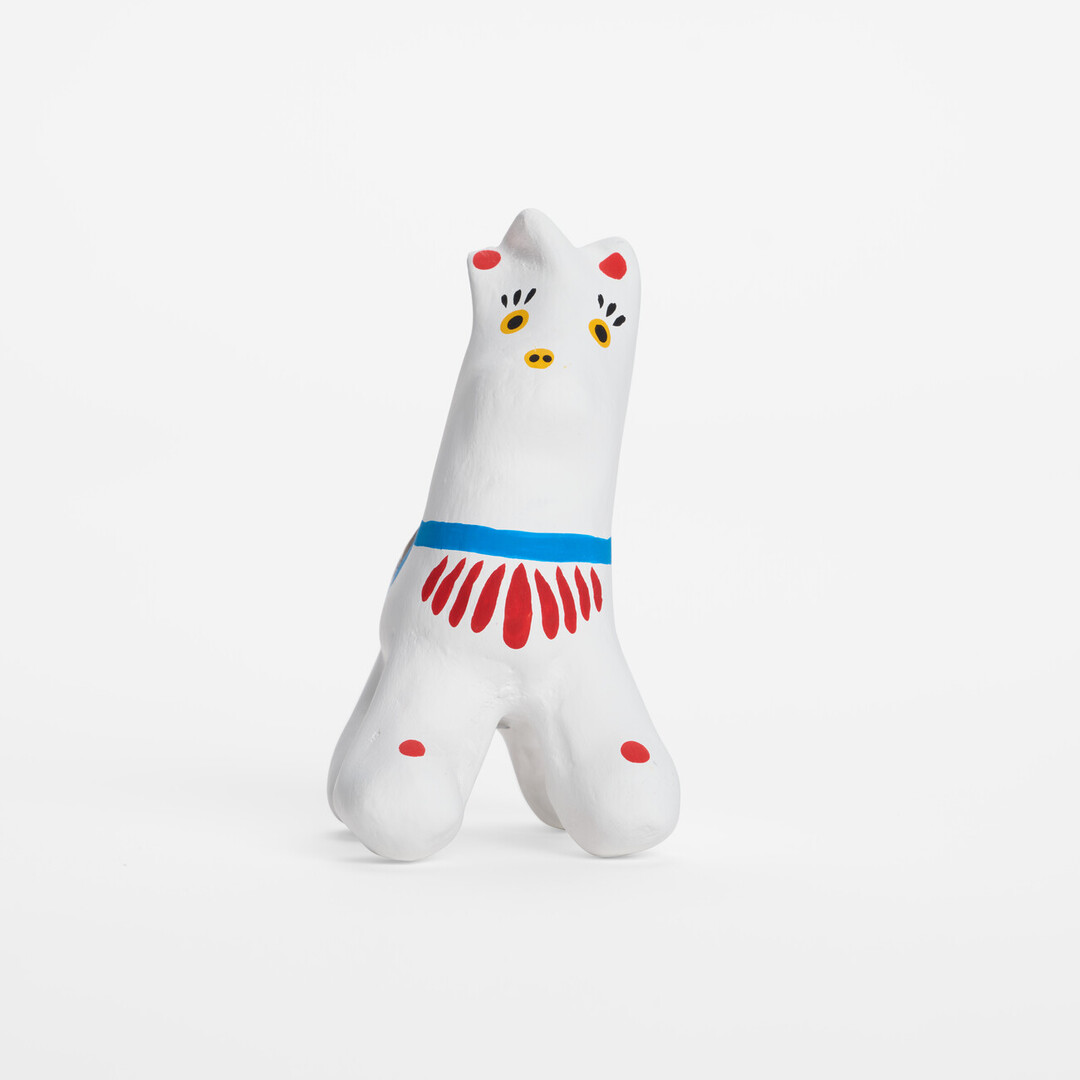
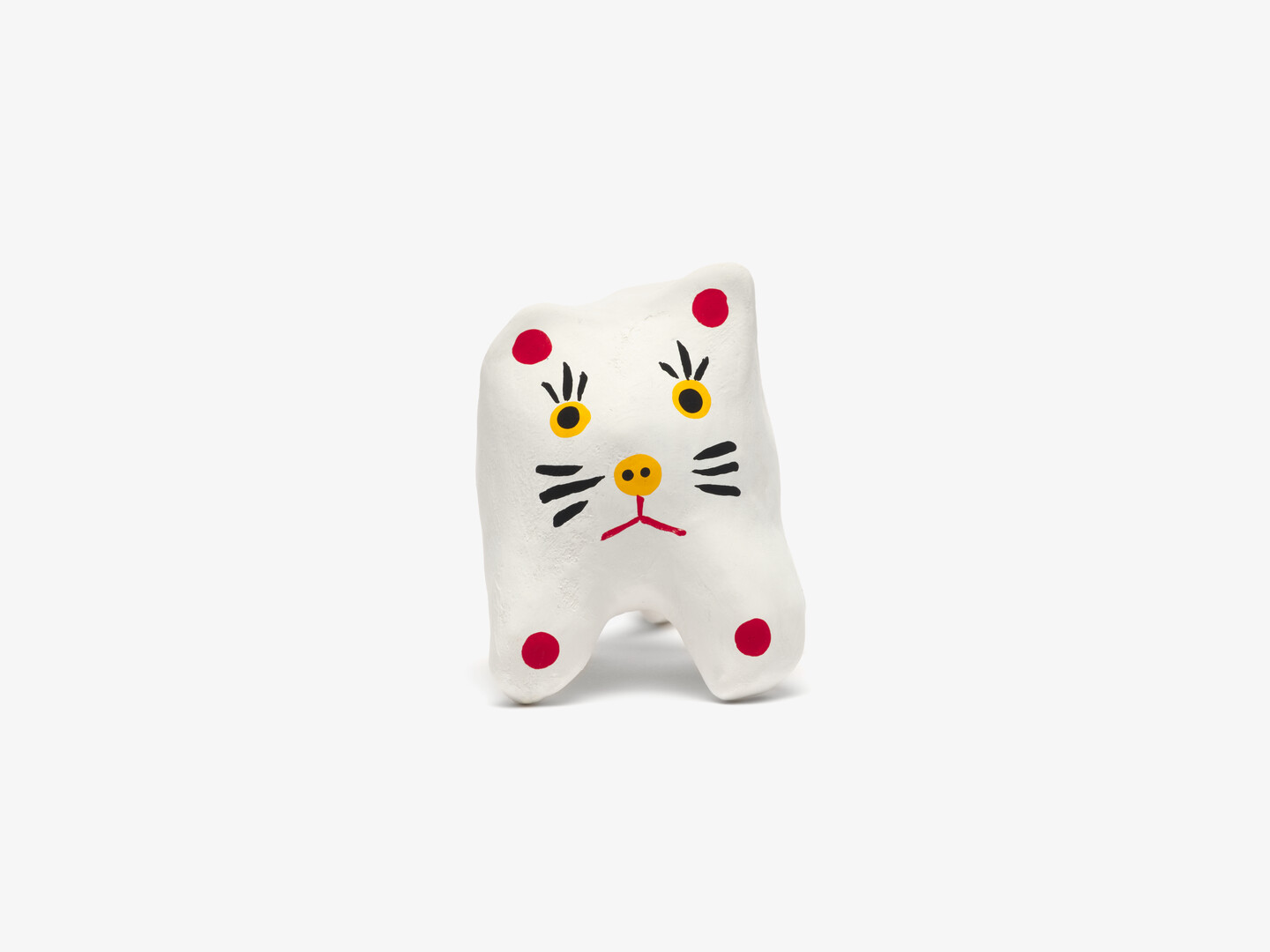
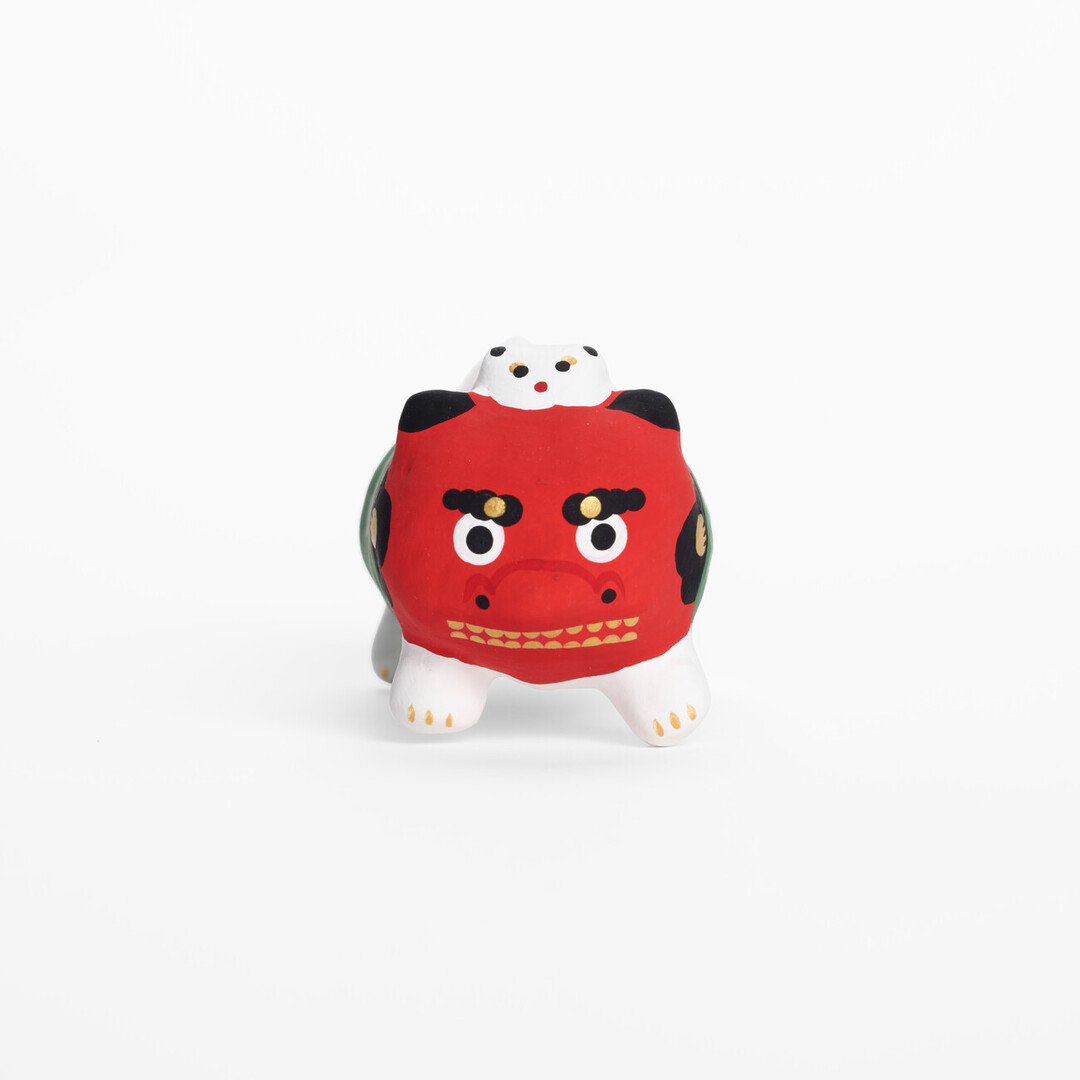
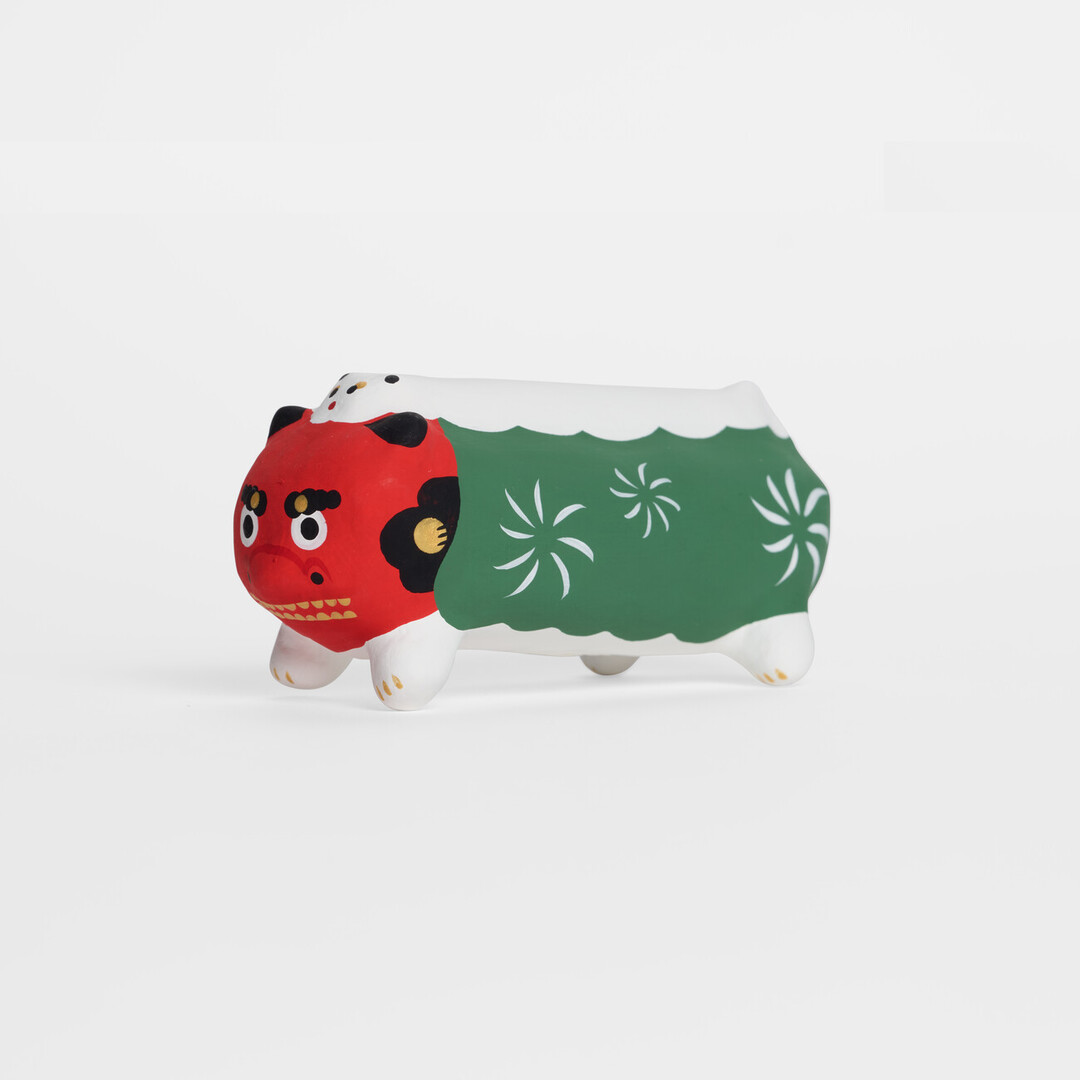
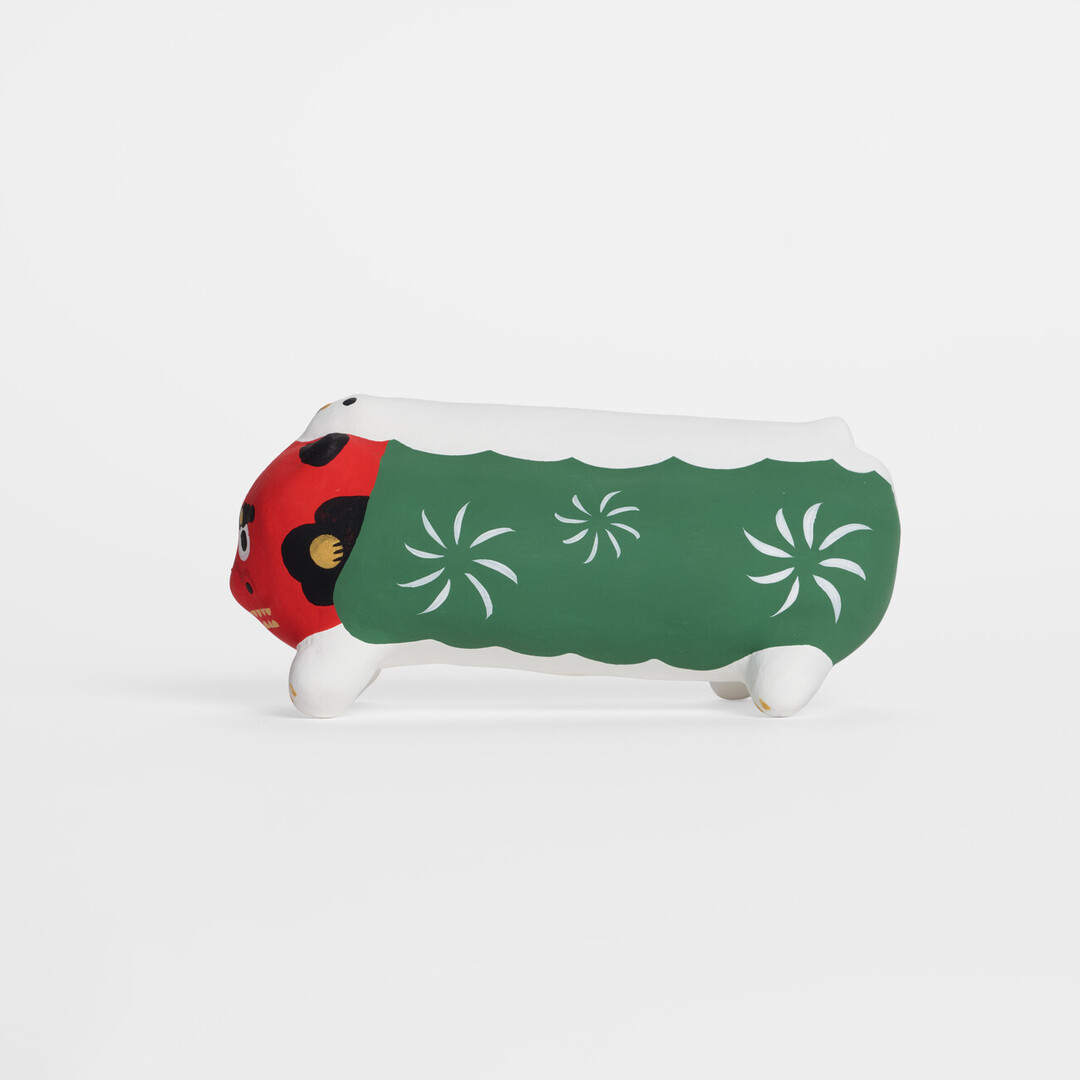
A vibrant papier-mâché shishigashira made in Nara using the Japanese hariko method.
Creating figurines is an age-old craft in Japan. Small humanoid and animal figurines made of clay have been discovered which date as far back as the Jōmon period (approx. 14,000-400 BC). As one of the earliest forms of craftsmanship and creative expression, the creation of such figurines grew in popularity as people experimented with new techniques and materials such as wood, metal and paper. The Japanese technique of hariko is one such example.
These hariko figurines have been created at the Good Job! Center Kashiba which strives to create jobs in various industries for people with disabilities. Instead of a carved wooden or bamboo mould that would normally be wrapped in washi (Japanese paper), they use 3D printed moulds and wrap them in either washi or newspaper which has been soaked in a specially prepared mix of glue and chalk to create the figurines. Without removing the mould within, the figurines are simply painted by hand using special white paint called gofun, and acrylic paint for the colours. Hariko has been used for centuries in Japan to create a wide variety of folk toys. These toys are often used as ornaments or as good luck charms carrying symbolic meanings.
This figurine is shaped as the lion in Shishi-mai (lit. lion dance), a dance performed in many Asian countries, including Japan, during festivals and on auspicious occasions such as the New Year.
With a history spanning over 1,000 years, Shishi-mai was first recorded in Japan in 752 at the inauguration ceremony of the Tōdai-ji temple in Nara. Accompanied by flute and drums, dancers imitate a lion’s movements during a performance believed to bring good fortune and ward off evil spirits. In some instances, the lion playfully ‘bites’ the heads of observers to bestow extra luck.
As each piece is handmade, there might be individual differences.
Size : W4×D10×H5cm
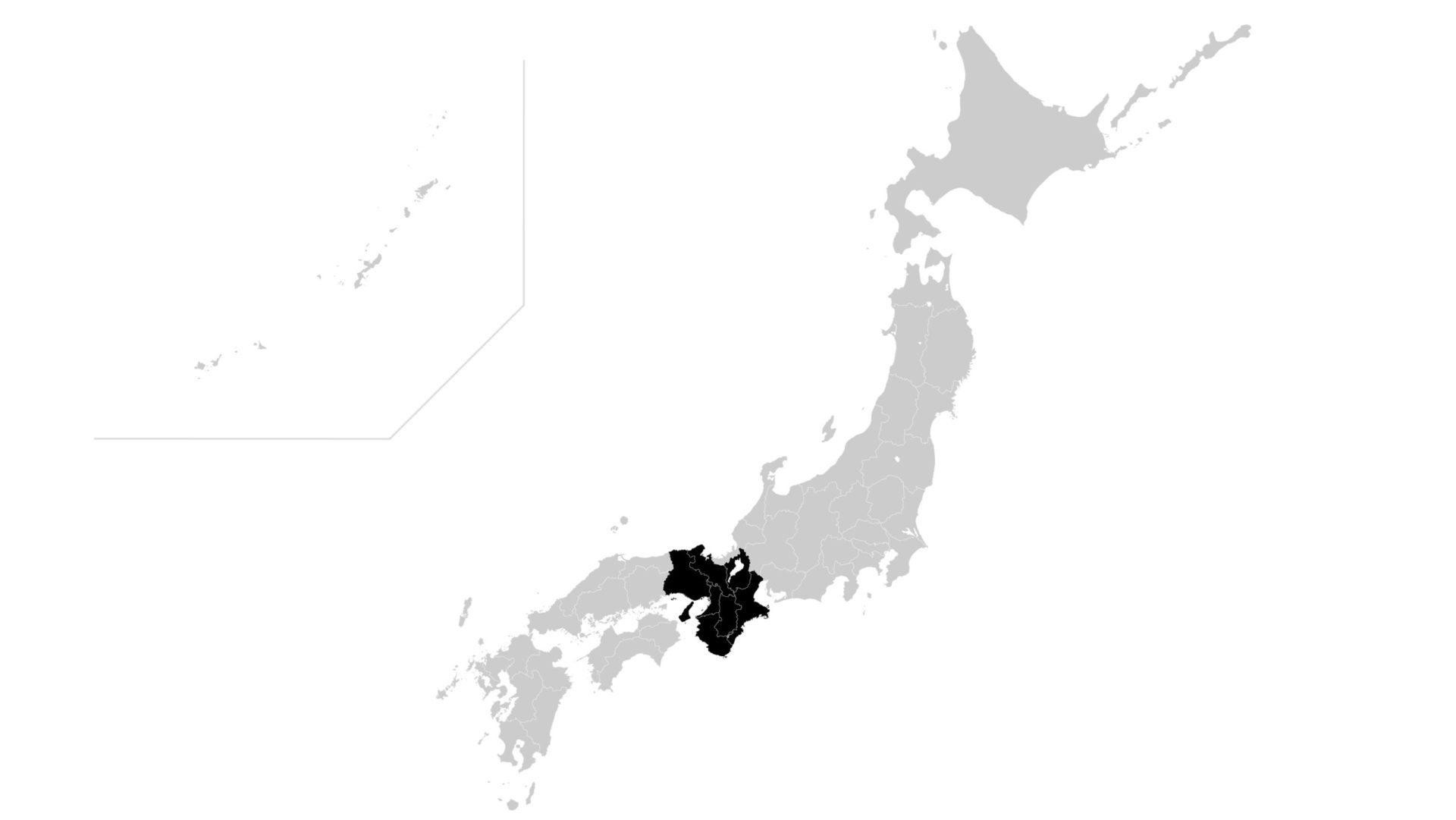
Kansai
The Kansai region includes the second-most populated metropolitan area in Japan with its largest city Osaka. Kyoto and Nara, two of Japan’s former capital cities, are home to important temples and shrines and strongholds of intangible cultural heritage, such as the Kyoto textile weaving skills of Nishijin.