Furoshiki Isa-Monyō Reversible Knot
風呂敷 伊砂文様両面 結
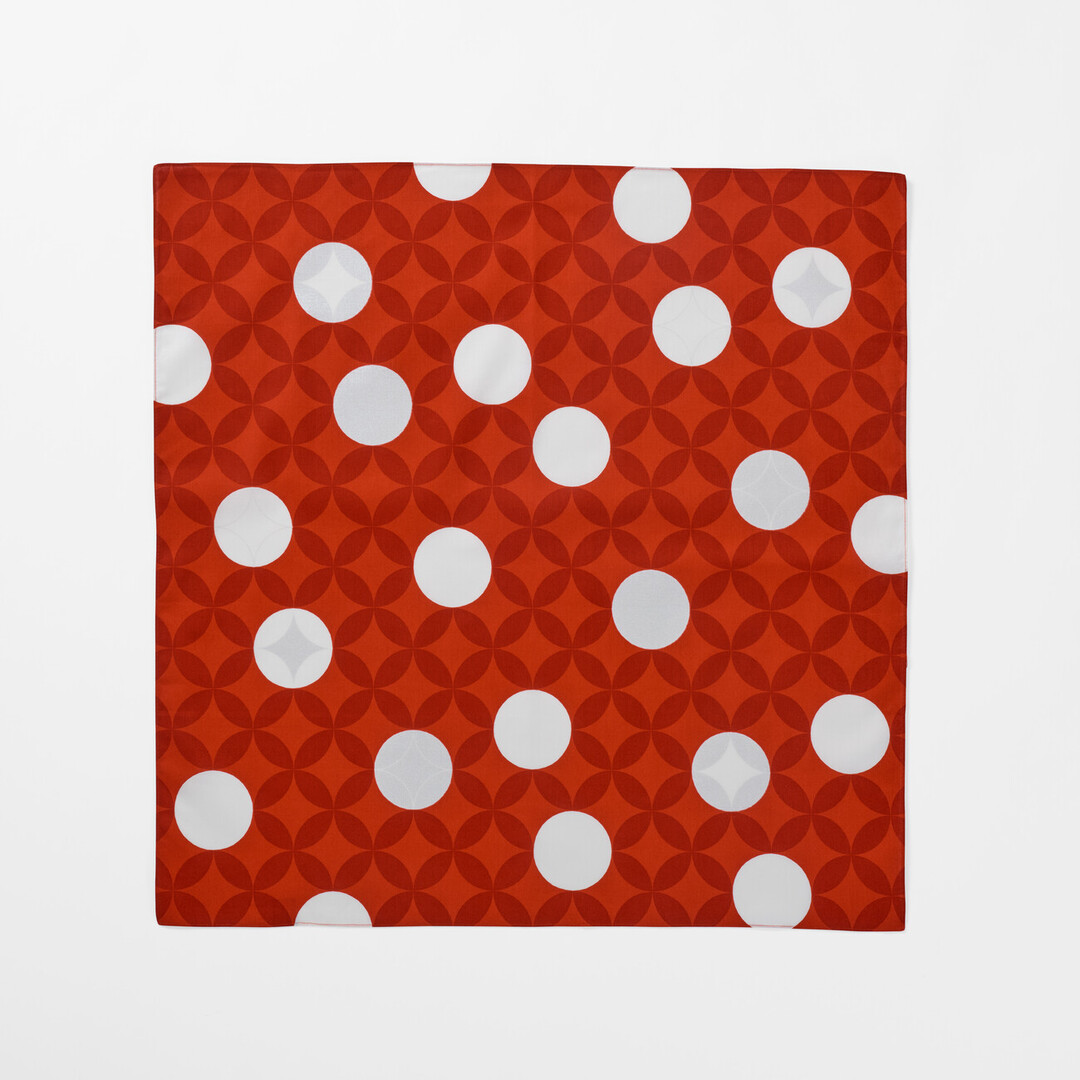
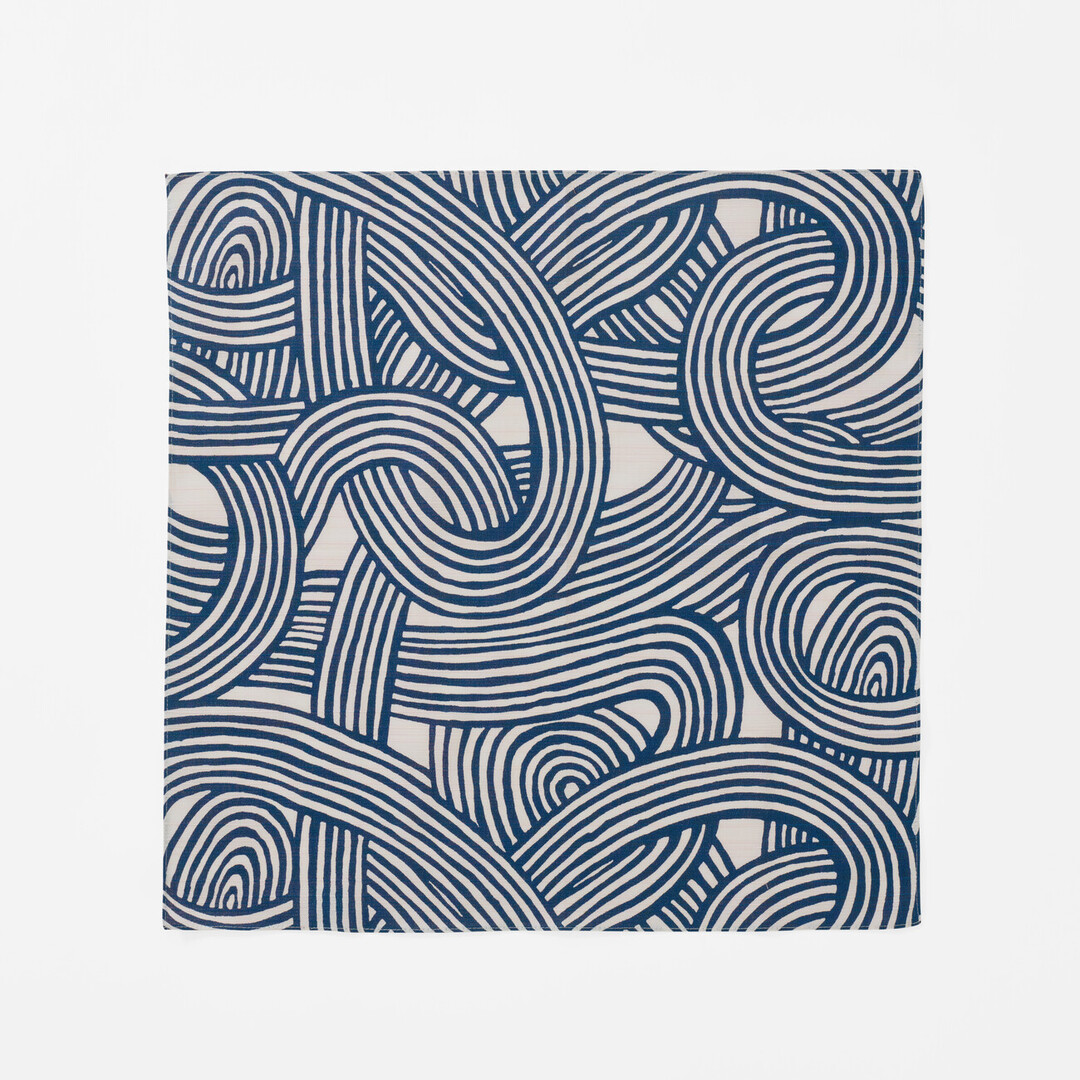
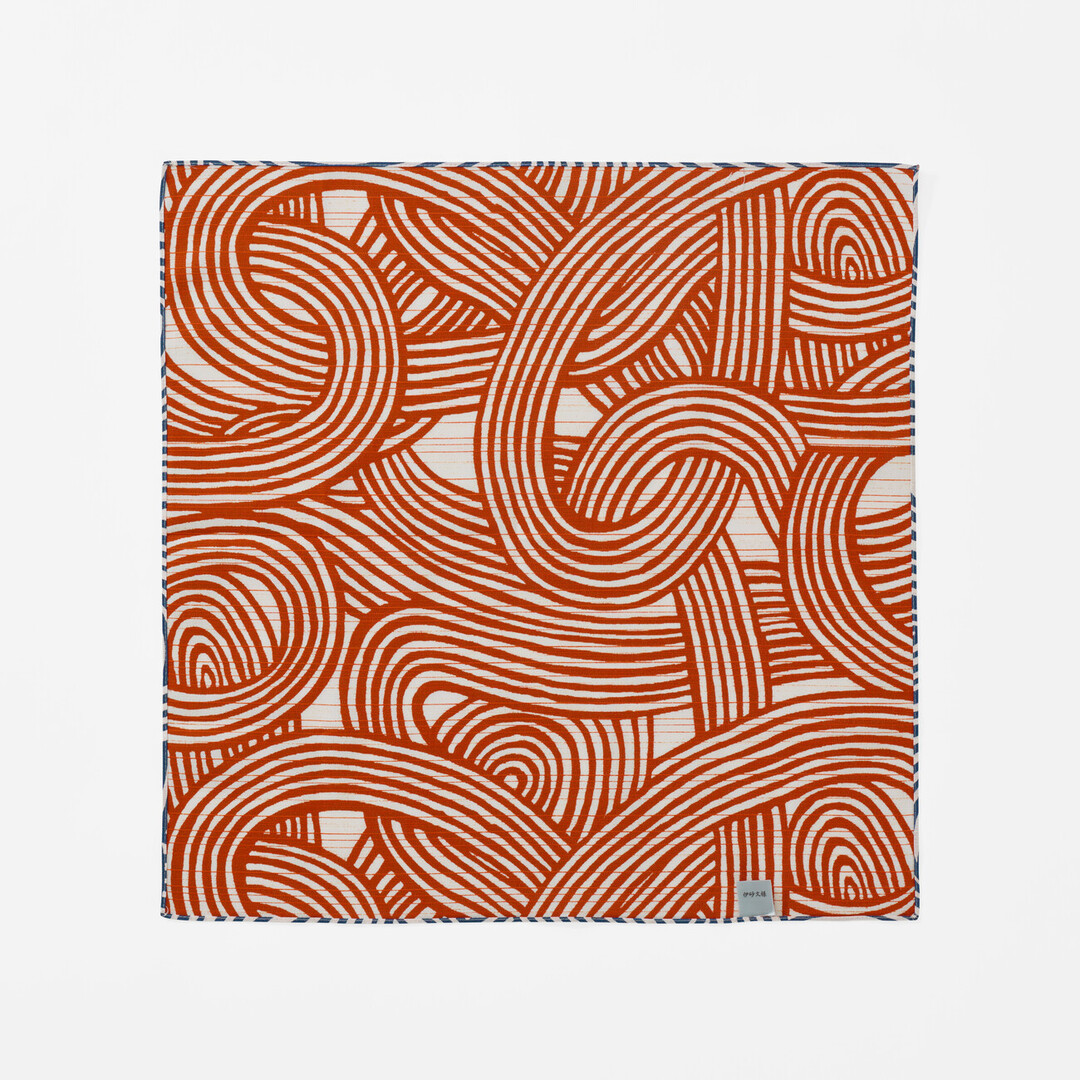
Furoshiki (wrapping cloth) with a reversible design inspired by knots, a motif often associated with the bond between people.
The wrapping culture of Japan has developed over more than 1,000 years, with the practice of wrapping objects in cloth already established by the Nara period (710–794 CE). Furoshiki continue to be used in many ways, from binding precious objects for protection to wrapping gifts decoratively or carrying items from place to place.
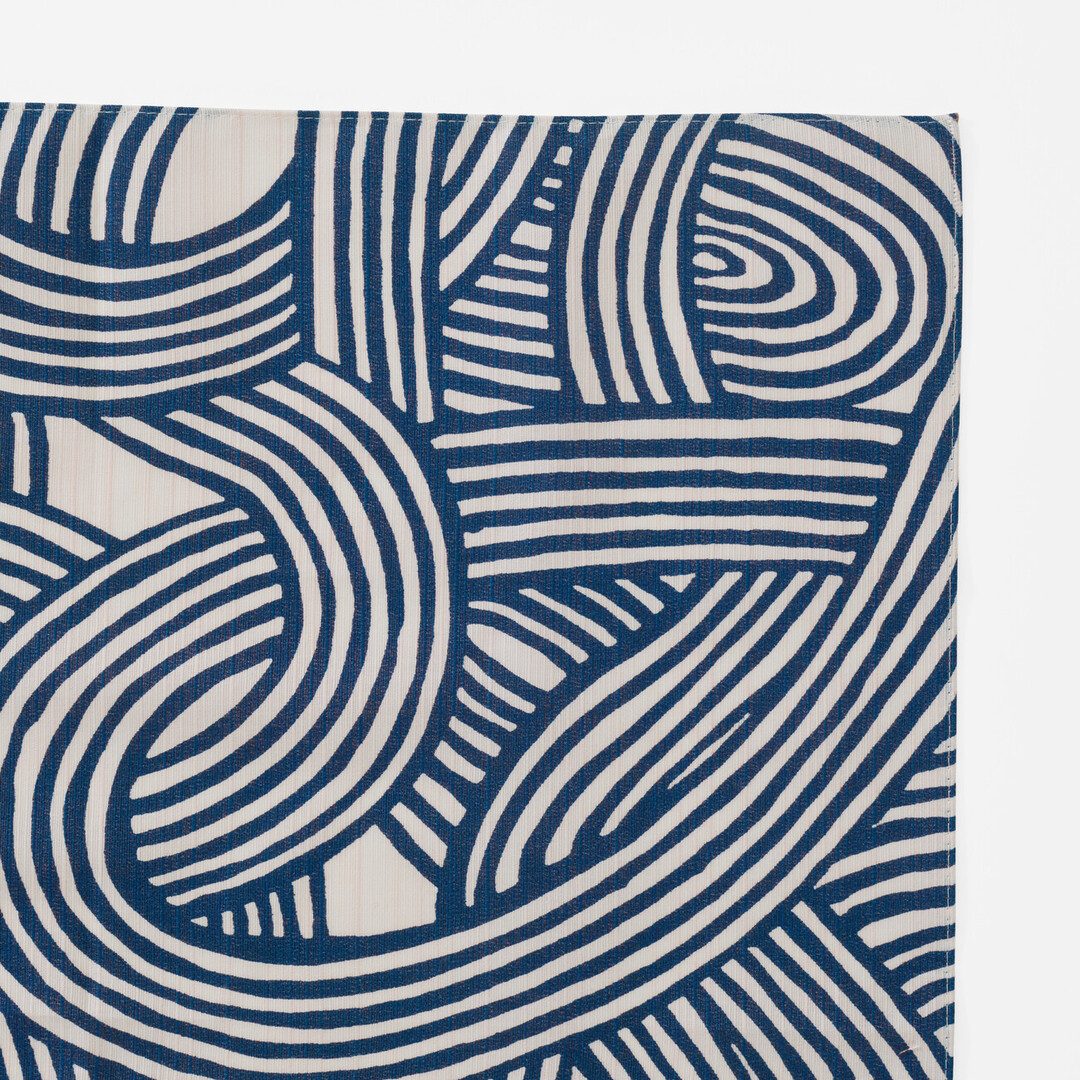
This furoshiki features two colour tones, a navy pattern of undulating threads on one side and orange on the other. The method of dyeing different colours on each side was developed by Yamada Sen-i in collaboration with craftspeople in Kyōto.
The pattern is inspired by a knot motif often associated with the bond between people. It expresses gratitude and is used in family celebrations such as weddings. The design is part of Isa-Monyō series, created by Isa-Monyō laboratory, which has produced distinctive auspicious patterns and designs since the 1940s.
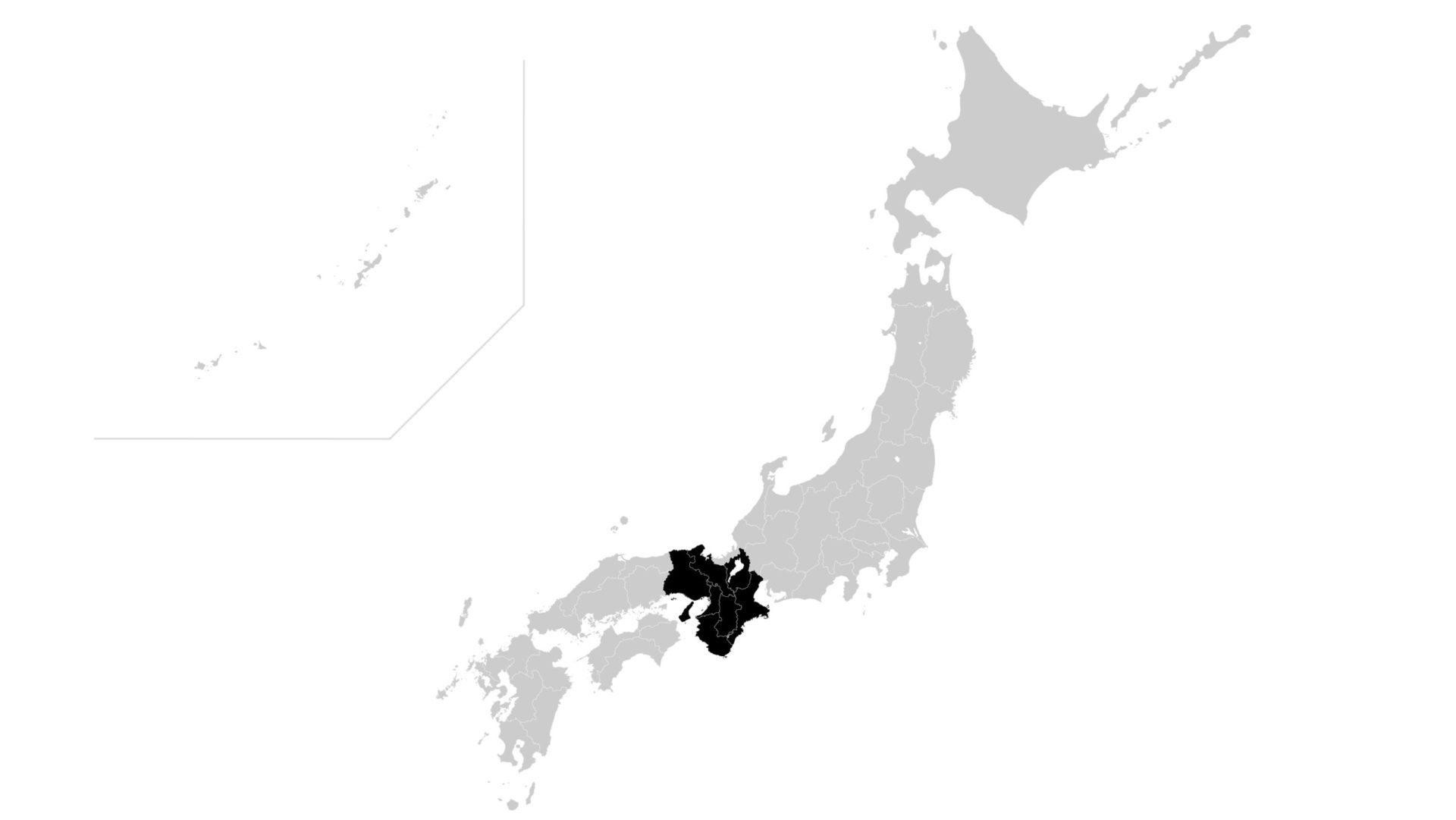
Kansai
The Kansai region includes the second-most populated metropolitan area in Japan with its largest city Osaka. Kyoto and Nara, two of Japan’s former capital cities, are home to important temples and shrines and strongholds of intangible cultural heritage, such as the Kyoto textile weaving skills of Nishijin.